Your mail campaigns success is strictly correlated with the quality of your contact list.
There are 3 key factors in Email Success:
- content of your newsletter;
- list quality and segmentation;
- email marketing provider.
As you can see 66% of the success rate is in your back yard (the email marketer).
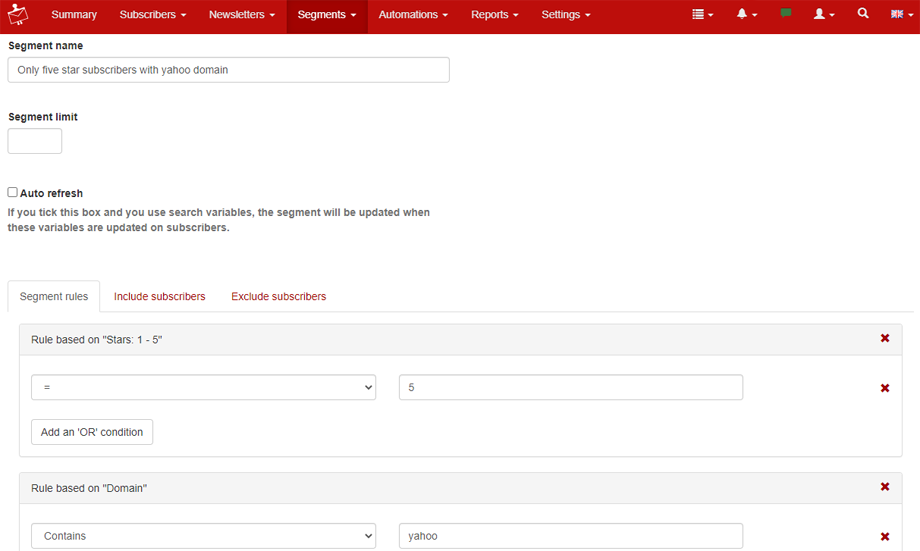
NewsMAN email marketing platform has powerful segmentation capabilities.
There is no limit of subscribers' fields you can import in NewsMAN.
The more data you have about your subscribers, the better your email campaigns results will be.
The only required field is email or phone (we have SMS marketing too).
firstname and lastname are highly suggested because by using them you demonstrate to the ISP that you the sender know the recipient by name.
The rest is up to you:
- genre
- city
- country
- age
- income
- product preferences
- average order value
- and much more
The 2nd way of segmenting your subscribers email list is by learning from the actions they make in the newsletter or on the website. They view, click, purchase, add to wishlist etc.
Most of this data is sent back to your NewsMAN account and you can use it to segment your contact list.
Segment by viewed newsletters.
Segment by clicked newsletters.
Segment by viewed pages or product categories.
Segment by purchase or VIP customers.
Segment, segment, segment.
The more you segment your data, the better your communication with subscribers will be. And sending relevant email campaigns to each group of subscribers will result in a better open rate, click rate, CTR and better ROI.